

DIGITAL DECA FROM 5 OCTOBER 2026
10/1/2026
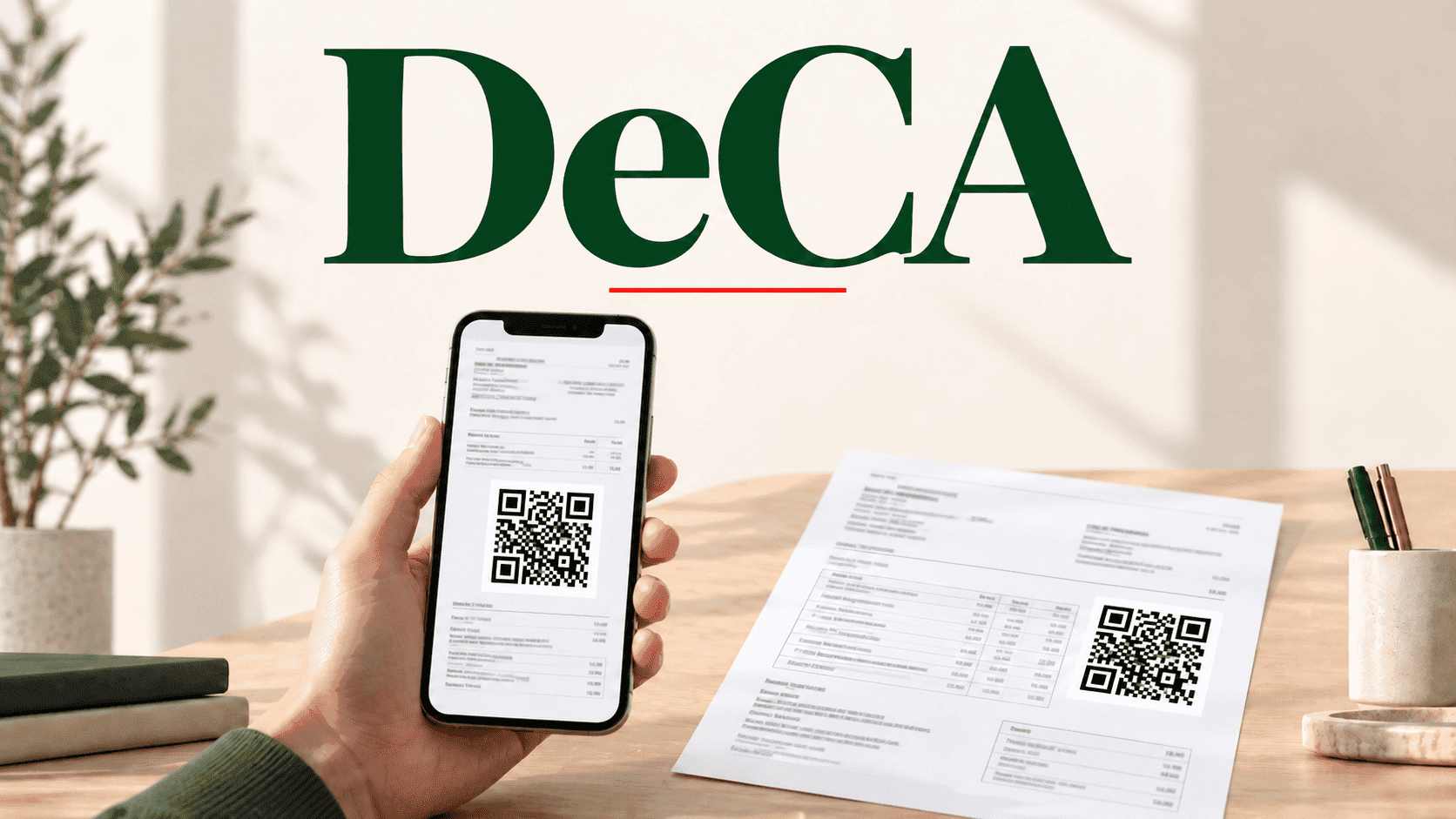
On 5 October 2026, the digital DeCA will come into force for public road freight transport operations to which this measure applies. At Transports Porqueres, we are already using this system in our day-to-day operations.
Below, we outline the main aspects of the digital DeCA and its implications for freight transport.
Which transport operations does it apply to?
It is required for public freight transport operations with both origin and destination in Spain, including cabotage operations carried out within Spanish territory. International transport operations that only transit partly through Spain are not subject to this requirement and use the documentation applicable to international transport.
What happens to paper documents and the other transport documentation?
The control document must be generated digitally before the transport operation begins: a form completed only on paper or a scanned document will not be sufficient. This does not prevent the driver from carrying a printed copy of the digital DeCA with its QR code.
The measure also does not replace any other documents that may be required for a particular transport operation, depending on the type of service or goods being carried.
Who must generate the DeCA?
The regulations do not assign responsibility for generating the document exclusively to either party. The contractual consignor and the actual carrier are both responsible for ensuring that the DeCA exists and accompanies the transport operation, so they must coordinate to make sure it is available before the journey begins.
Responsibility for the accuracy of the information is divided according to the type of data provided by each party.
What happens if the carrier is subcontracted?
When a transport company subcontracts a transport operation, that company appears on the DeCA as the contractual consignor, while the company actually carrying out the transport appears as the actual carrier.
For example, if Transports Porqueres subcontracts a service to a partner transport company, we will appear as the contractual consignor and the partner company as the actual carrier. Both parties are responsible for ensuring that the DeCA is properly completed and that the driver carries it during the transport operation.
Can several shipments be included in the same DeCA?
Yes. A single DeCA may include several shipments, for example when there is more than one loading or unloading point.
To do so, the contractual consignor and the actual carrier must be the same for all shipments, and the information relating to each shipment must be clearly identified.
The order in which they appear in the document does not determine the order in which loading or unloading operations must take place.
What information must it include?
The DeCA must include, at a minimum:
• Name or company name, tax identification number and address of the contractual consignor.
• Name or company name and tax identification number of the actual carrier.
• Place of origin and destination of the shipment.
• Nature and weight of the goods. If the circumstances of the load make it difficult to determine the exact weight, another measurement enabling the weight to be estimated must be used.
• Identification of the special circulation permit, where the vehicle is required to hold one.
• Date on which the transport operation is carried out.
• Vehicle registration number. In the case of an articulated vehicle combination, both the tractor unit registration number and the semi-trailer or trailer registration number must be indicated. If the vehicle is changed during the transport operation, the transport company must record this change in the document.
• Observations, reservations or other relevant information, whenever any of the parties involved requests that they be included.
The contractual consignor is responsible for the information relating to the companies, the origin and destination, and the nature and weight of the goods. The actual carrier is responsible for the special circulation permit, the date and the vehicle registration numbers.
As regards observations or reservations, each party is responsible for those it enters in the document.
How must it be presented during an inspection?
The DeCA must be a digitally generated PDF, with a maximum file size of 5 MB, containing a QR code that allows the document to be downloaded. A scanned paper document does not meet this requirement.
Before the transport operation begins, the driver must receive either an electronic or printed copy containing the QR code. In the event of an inspection, the document with its QR code must be presented.
The DeCA does not require a signature in order to be valid as a control document.
What if any information changes during the journey?
If any information needs to be changed during the transport operation, the existing PDF may be amended or a new one may be generated.
If the existing PDF is amended, the new information and the reason for the change must be added, while the previous information must be retained and clearly marked as no longer valid. In this case, the URL and QR code will remain unchanged.
If a new PDF is generated, it must contain all the relevant information and will have a different URL and QR code. The original document must be retained in order to ensure full traceability of the changes.
The contractual consignor and the actual carrier must retain the document for at least one year.
At Transports Porqueres, we believe that proper document management is also an essential part of well-organised transport operations. For more information about the digital DeCA, you can consult the Frequently Asked Questions published by the Spanish Ministry of Transport:
Tags
How can we help?
Stay informed


Related News
10/7/2025
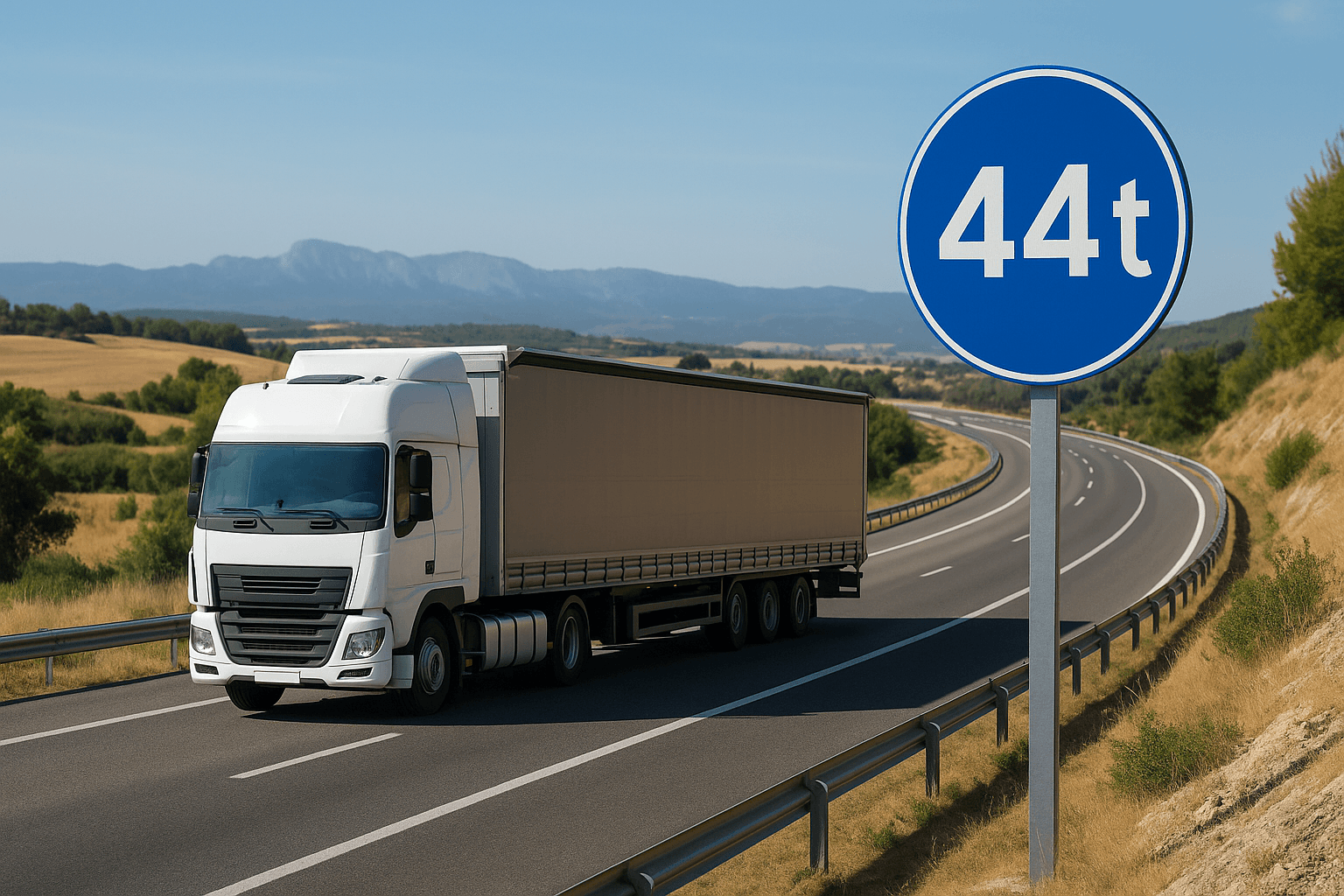
NEW REGULATION IN SPAIN: AUTHORIZATION TO TRANSPORT UP TO 44 TONNES
A measure to improve efficiency and reduce emissions in domestic road transport
The Spanish Government has approved Order PJC/780/2025, published in the Boletín Oficial del Estado (Official State Gazette) on July 23, ...

11/13/2021
New amendments to the R.G. of circulation, the R. G. of vehicles and the R. G. of drivers.
The Council of Ministers has just approved two Royal Decrees modifying, on the one hand, both the General Road Traffic Regulations and the General Vehicle Regulations and, on the other, the General Driver Regulations. If you want to find out about all the changes, how they affect you and when they come into force, don't miss this new article we ...
10/7/2025
NEW REGULATION IN SPAIN: AUTHORIZATION TO TRANSPORT UP TO 44 TONNES
A measure to improve efficiency and reduce emissions in domestic road transport
The Spanish Government has approved Order PJC/780/2025, published in the Boletín Oficial del Estado (Official State Gazette) on July 23, ...
11/13/2021
New amendments to the R.G. of circulation, the R. G. of vehicles and the R. G. of drivers.
The Council of Ministers has just approved two Royal Decrees modifying, on the one hand, both the General Road Traffic Regulations and the General Vehicle Regulations and, on the other, the General Driver Regulations. If you want to find out about all the changes, how they affect you and when they come into force, don't miss this new article we ...
10/7/2025
NEW REGULATION IN SPAIN: AUTHORIZATION TO TRANSPORT UP TO 44 TONNES
A measure to improve efficiency and reduce emissions in domestic road transport
The Spanish Government has approved Order PJC/780/2025, published in the Boletín Oficial del Estado (Official State Gazette) on July 23, ...